
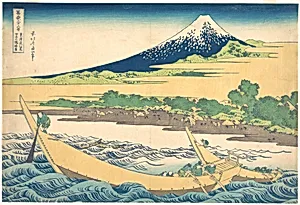
冨嶽三十六景 東海道江尻田子の浦略図|Tago Bay near Ejiri on the Tōkaidō (Tōkaidō Ejiri Tago no ura ryaku zu), from the series Thirty-six Views of Mount Fuji (Fugaku sanjūrokkei)
ca. 1830–32
Medium
Woodblock print; ink and color on paper
Dimensions
9 3/4 x 14 3/8 in. (24.8 x 36.5 cm)
Classification
Prints
Culture & Period
Japan · Edo period (1615–1868)
Department
Asian Art
Museum
Metropolitan Museum of Art, New York, NY
Credit
Rogers Fund, 1922
Accession Number
JP1288
Rights
Public Domain
Tags
Art Historical Context
Katsushika Hokusai's *Tago Bay near Ejiri on theōkaidō*, from his groundbreaking series *Thirty-six Views Mount Fuji* (ca. 1830–32), captures the majestic peak framed by everyday coastal life along Japan's historic Tōkaidō highway. This woodblock print, a pinnacle of ukiyo-e ("pictures of the floating world"), showcases Hokusai's mastery in depicting Mount Fuji from diverse vantage points, emphasizing its spiritual and cultural reverence in Japanese art. Created during the Edo period (1615–1868), the work reflects a time when such prints democratized art, making scenic beauty accessible beyond elite circles. In this vibrant scene, towering waves crash near Ejiri shore, with boats dotting the bay and figures—likely fishermen—braving the elements under Fuji's distant gaze. Hokusai's innovative use of Prussian blue pigment and bold composition creates dramatic depth and movement on paper (9 3/4 x 14 3/8 in.), blending seascape, mountains, and human activity. The series' horizontal format and vivid colors influenced global artists, from Impressionists to modern designers. Housed in the Metropolitan Museum of Art's Asian Art department (Rogers Fund, 1922), this print exemplifies Edo Japan's printmaking prowess, where collaborative carving and printing produced affordable, mass-reproduced masterpieces that celebrated nature's grandeur amid transient human endeavors.
About the Artist
Katsushika Hokusai · 1760–1849
Katsushika Hokusai (1760-1849) stands as one of history's most influential artists, a Japanese master who revolutionized the ukiyo-e woodblock print tradition and profoundly shaped Western art. Born in the Katsushika district of Edo (modern-day Tokyo) to an artisan family, Hokusai lived through nearly nine decades of extraordinary creative evolution, adopting over thirty different artistic names t...