
Tambora
Unknown Artist
late 19th century
Medium
Wood
Dimensions
L. 126 cm; W. 32 cm; H. 27 cm
Classification
Chordophone-Lute-plucked-fretted
Culture
Indian
Department
Musical Instruments
Museum
Metropolitan Museum of Art, New York, NY
Credit
The Crosby Brown Collection of Musical Instruments, 1889
Accession Number
89.4.232
Rights
Public Domain
Art Historical Context
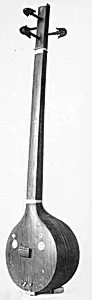
Nestled in the Metropolitan Museum of Art's Crosby Brown Collection of Musical Instruments acquired in 1889 the *Tambora* is a striking example of late 19th-century Indian. Carved from wood, this chordophone—classified as a lute with plucked, fretted strings—measures impressive 126 cm in length, 32 cm in width, and 27 cm in height. substantial form suggests it was designed for both visual elegance and practical performance, embodying the intricate woodworking techniques of Indian artisans who shaped resonant bodies and necks to amplify string vibrations. In Indian musical traditions, plucked lutes like the *Tambora* played vital roles in folk and devotional music, providing rhythmic and melodic foundations for ensembles. The fretted design allowed precise intonation across scales central to ragas, highlighting the instrument's cultural significance in social gatherings, rituals, and storytelling. Though the artist remains unknown, the piece reflects the era's blend of functionality and artistry, where everyday objects doubled as heirlooms. Visitors will appreciate how this *Tambora* bridges sound and sculpture, inviting us to imagine its twanging strings echoing through vibrant Indian villages over a century ago.