
Medium
Hard-paste porcelain, pewter
Dimensions
Height: 8 in. (20.3 cm)
Classification
Ceramics-Porcelain
Culture
German, Nymphenburg
Department
European Sculpture and Decorative Arts
Museum
Metropolitan Museum of Art, New York, NY
Credit
Gift of Estate of James Hazen Hyde, 1959
Accession Number
59.208.28
Rights
Public Domain
Tags
Art Historical Context
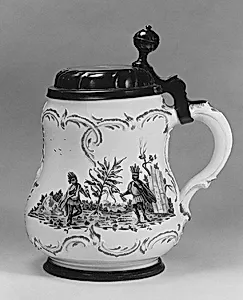
This elegant tankard, crafted in 1778 by the renowned Nymphenburg Porcelain Manufactory in Bavaria with decoration by Johann Adam Huber, exemplifies the pinnacle of 18th-century German porcelain artistry. Standing at 8 inches tall, it combines hard-paste porcelain—a durable, translucent material developed by Europeans to rival Chinese imports—with a practical pewter lid, ideal for serving beer or wine in sociable settings. Nymphenburg, founded in 1747 under Elector Maximilian III Joseph, was a hub of Rococo innovation, producing luxurious tableware that blended technical mastery with whimsical design. The tankard's surface likely features painted scenes of men amid lush plant motifs, capturing the playful, naturalistic elegance of the Rococo style. Huber's skilled handiwork highlights the manufactory's expertise in finely detailed enameling and gilding, fired at high temperatures to achieve vibrant, lasting colors. These vessels weren't just functional; they were status symbols for Europe's elite, showcasing Bavaria's cultural prestige during the Enlightenment era. Today, housed in The Metropolitan Museum of Art as a gift from the Estate of James Hazen Hyde, this tankard invites us to appreciate the fusion of everyday utility and artistic splendor. Imagine toasting with Bavarian nobility—its delicate beauty endures as a testament to porcelain's transformative role in decorative arts.