
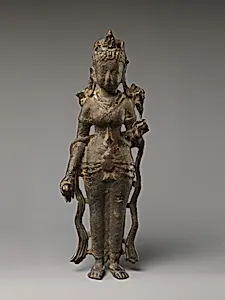
Tara
Unknown Artist
ca. 7th century
Medium
Copper alloy
Dimensions
H. 12 in. (30.5 cm)
Classification
Sculpture
Culture
North India (possibly Uttar Pradesh)
Department
Asian Art
Museum
Metropolitan Museum of Art, New York, NY
Credit
Samuel Eilenberg Collection, Ex Coll.: Columbia University, Purchase, Friends of Asian Art Gifts, 1987
Accession Number
1987.218.4
Rights
Public Domain
Tags
Art Historical Context
This elegant copper alloy sculpture of Tara, created around the 7th century in North India (possibly Uttar Pradesh), portrays the beloved Buddhist deity known as the embodiment of compassion and swift protection. Standing just over a foot tall, the figure belongs to the Post-Gupta period, when Buddhist art in the region emphasized graceful proportions and serene expressions to inspire devotion. In the Post-Gupta era, copper alloy became a favored medium for sacred images because it allowed artisans to capture fine details through lost-wax casting while ensuring durability for temple use. Such sculptures often served as focal points for meditation, helping worshippers connect with Tara’s qualities of wisdom and care. Acquired by the Metropolitan Museum of Art from the Samuel Eilenberg Collection, this work offers visitors a tangible link to early medieval Buddhist practice in northern India and the refined artistic traditions that flourished after the Gupta Empire.