
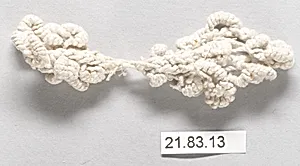
Tassel
Unknown Artist
17th century
Medium
Linen
Dimensions
L. 1 3/4 inches 4.4 cm
Classification
Textiles-Trimmings
Culture
Italian
Department
European Sculpture and Decorative Arts
Museum
Metropolitan Museum of Art, New York, NY
Credit
Gift of Mrs. J. Pierpont Morgan, 1921
Accession Number
21.83.13
Rights
Public Domain
Art Historical Context
Nestled in the Metropolitan Museum of Art's Sculpture and Decorative Arts, this delicate linen tassel from 17th-century Italy exemplifies exquisite craftsmanship of Renaissance-era textiles. Measuring just 1 3/4 inches (4.4 cm) in length it belongs to the category of "Textiles-Trimmings," small yet intricate embellishments designed to add elegance and flourish. Crafted by an unknown artist its fine linen threads were likely knotted and looped through meticulous needlework techniques, showcasing the technical skill of Italian artisans during a period when decorative details elevated everyday luxury. In Baroque Italy, tassels like this one adorned the edges of garments, curtains, upholstery, and ecclesiastical vestments, serving both functional and symbolic roles. They caught the light and movement, symbolizing wealth and refinement amid the opulence of courtly life. Linen, prized for its durability and subtle sheen, was a favored medium for such trimmings, allowing for complex patterns that reflected the era's growing emphasis on ornamentation in domestic and fashion arts. Generously gifted to the Met in 1921 by Mrs. J. Pierpont Morgan, this unassuming artifact invites us to appreciate the unsung heroes of decorative history—tiny masterpieces that once animated grand interiors and wardrobes, preserving a whisper of Italy's textile heritage.