
Taste (Gustus), from Quinque Sensuum
ca. 1655
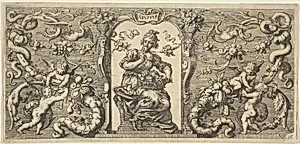
Medium
Engraving
Dimensions
Sheet: 3 11/16 × 7 15/16 in. (9.4 × 20.2 cm)
Classification
Prints|Ornament & Architecture
Department
Drawings and Prints
Museum
Metropolitan Museum of Art, New York, NY
Credit
Harris Brisbane Dick Fund, 1945
Accession Number
45.101.3
Rights
Public Domain
Tags
Art Historical Context
"Taste (Gustus)," from the series *Quque Sensuum* (Five Senses), is a delicate engraving created around 1655 by designer Franz Cleyn and engr Robert Walton. Cleyn a German-born artist who worked in England and collaborated with Peter Paul Rubens, was known for his intricate Baroque designs blending classical motifs with lively ornamentation. This print captures the sense of taste through allegorical imagery, featuring women, birds, snakes, and a cornuc—symbols evoking abundance, indulgence, and the pleasures of palate in 17th-century European art. As part of a popular Baroque tradition, the *Quinque Sensuum* series personified the five senses, educating viewers on human perception while delighting with elaborate details. Engraving, the medium here, allowed for precise line work and widespread dissemination of such ornamental prints, often used in decorative arts, books, or as collectibles. Measuring just 3 11/16 × 7 15/16 inches, this intimate sheet exemplifies the technical virtuosity of the era, where fine lines conveyed texture and depth. Housed in the Metropolitan Museum of Art's Drawings and Prints department, thanks to the Harris Brisbane Dick Fund, this work reflects the cultural fascination with sensory experience amid the opulence of the Baroque period. Visitors will appreciate its whimsical yet profound nod to everyday delights, bridging art and life's sensory joys.