
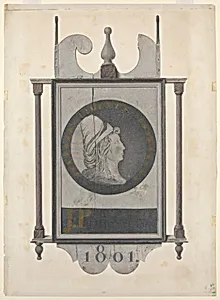
Tavern Sign
c. 1939
Medium
watercolor, gouache, and graphite on paper
Dimensions
overall: 73.3 x 53.1 cm (28 7/8 x 20 7/8 in.) Original IAD Object: 31" wide; 49" high
Classification
Index of American Design
Department
CG-W
Museum
National Gallery of Art, Washington, D.C.
Credit
Index of American Design
Accession Number
1943.8.20
Rights
Public Domain
Art Historical Context
Step into the lively world of American folk art with *Tavern Sign*, a watercolor, gouache, and graphite by Alfred Parys, created around 1939. Measuring 73.3 x 53.1 cm (28 7/8 x 20 7/8 in.), this vividly captures the bold imagery and rustic charm of a traditional tavern sign, those eye-catching wooden boards that beckoned travelers to colonial inns and pubs with their simple, symbolic designs. As part of the Index of American Design—a groundbreaking Federal Art Project under the Works Progress Administration (WPA) from 1935 to 1942—this piece exemplifies the era's effort to document and celebrate everyday American craftsmanship during the Great Depression. Parys, one of many skilled artists employed, meticulously reproduced folk objects to preserve their cultural essence for future generations. Tavern signs, often featuring animals, trades, or patriotic motifs, were vital roadside markers in early America, blending functionality with folk artistry. Parys's masterful use of watercolor and gouache brings vibrant colors and textures to life, while graphite outlines ensure precise details, mirroring the original object's weathered authenticity (noted at 31 inches wide by 49 inches high). Housed in the National Gallery of Art's Index of American Design collection, this work highlights how ordinary signs embodied community spirit and ingenuity, offering visitors a window into America's spirited past.