
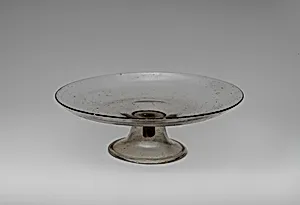
Tazza
ca. 1665–70
Medium
Glass
Dimensions
Overall (irregular diameter, confirmed): 2 1/2 × 7 1/4 × 7 1/4 in. (6.4 × 18.4 × 18.4 cm)
Classification
Glass
Culture
British, London
Department
European Sculpture and Decorative Arts
Museum
Metropolitan Museum of Art, New York, NY
Credit
Purchase, Gift of Mrs. Hugh J. Grant, in memory of her husband, Hugh J. Grant, by exchange, Gift of Margaret M. Carney, in memory of Farrell Joseph Carney, by exchange, and Bequest of Maria P. James, by exchange, 2016
Accession Number
2016.626
Rights
Public Domain
Art Historical Context
This elegant tazza, crafted around 1665–70 at the Glasshouse of the Duke of Buckingham in London, represents an early achievement in English glassmaking during the Restoration period. Standing just 2½ inches high with a broad, irregular 7¼-inch diameter, the glass bowl on its low foot would have served both practical and decorative purposes, perhaps holding fruits or sweetmeats at a noble table. Its British origin marks a moment when London glasshouses began developing distinctive styles, moving beyond imported Venetian influences toward local production. The Duke of Buckingham’s glasshouse played a notable role in advancing English glass technology and design in the mid-17th century. As one of the leading aristocratic patrons of the craft, Buckingham supported workshops that experimented with clearer, more durable glass suitable for elegant household wares. This tazza’s simple yet refined form highlights the period’s emphasis on functionality paired with understated beauty. Now part of the Metropolitan Museum’s collection of European Sculpture and Decorative Arts, the piece offers visitors a tangible connection to 17th-century British material culture. Its acquisition through generous exchanges and gifts underscores the ongoing appreciation for such rare surviving examples of early English glass.