
Tea caddy in the form of a tea bundle
1878
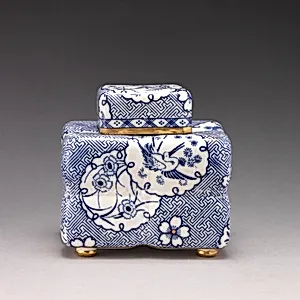
Medium
Bone china
Dimensions
confirmed: 4 × 4 1/8 × 2 7/8 in., 10.581oz. (10.2 × 10.5 × 7.3 cm, 300g)
Classification
Ceramics-Porcelain
Culture
British, Stoke-on-Trent, Staffordshire
Department
European Sculpture and Decorative Arts
Museum
Metropolitan Museum of Art, New York, NY
Credit
Gift of Helene Fortunoff and Robert Grossman, 2017
Accession Number
2018.62.55a, b
Rights
Public Domain
Art Historical Context
This charming tea caddy, crafted by the renowned British firm Minton(s) in 1878, takes the whimsical form of a bundled tea package, complete with knotted string and textured leaves. Housed in The Metropolitan Museum of Art's European Sculpture and Decorative Arts collection, this petite bone china object measures just 4 × 4⅛ × 2⅞ inches and weighs a mere 10.6 ounces, making it a delightful example of Victorian ingenuity from Stoke-on-Trent, the epicenter of England's pottery industry. Bone china, Minton's specialty, revolutionized ceramics with its exceptional strength, pure white translucency, and fine detail, thanks to the addition of bone ash in the clay body—a British innovation from the late 18th century. Tea caddies like this one were status symbols in affluent Victorian households, securely storing precious loose tea leaves amid Britain's tea-drinking obsession, fueled by imperial trade from Asia. The realistic "bundle" shape playfully nods to the commodity itself, blending everyday utility with artistic trompe-l'œil effects. Gifted to the Met in 2017 by Helene Fortunoff and Robert Grossman, this piece highlights Minton's mastery in decorative porcelain, bridging functionality and ornament in the Aesthetic Movement's spirit. Visitors will appreciate its tactile charm—a tiny treasure evoking the rituals of 19th-century high tea.
About the Artist
Minton(s) · 1793–2001
Minton is among the most distinguished names in the history of British ceramics, a firm whose two and a quarter centuries of production encompass everything from blue transfer-printed earthenwares to the most rarefied decorative porcelain of the Victorian age. The company was founded in 1793 by Thomas Minton (1765–1836) in Stoke-upon-Trent, Staffordshire — the heart of England's pottery industry. ...