
Tea chest
ca. 1750–55
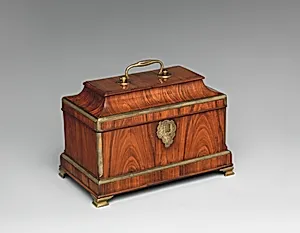
Medium
Oak, cedar, veneered with rosewood; brass, iron, and steel
Dimensions
Overall (without handle): 6 1/2 × 9 1/2 × 5 3/4 in. (16.5 × 24.1 × 14.6 cm)
Classification
Woodwork-Furniture
Culture
German, Neuwied am Rhein
Department
European Sculpture and Decorative Arts
Museum
Metropolitan Museum of Art, New York, NY
Credit
Purchase, Friends of European Sculpture and Decorative Arts Gifts, 1999
Accession Number
1999.147
Rights
Public Domain
Art Historical Context
Crafted around 1750–55 by Abraham Roentgen, a master cabinetmaker from Neuwied am Rhein,, this exquisite tea chest exemplifies the height of 18th-century European woodworking artistry. Measuring a compact 6½ × 9½ × 5¾ inches, it was designed to store precious tea leaves—a luxury commodity symbolizing status in Rococo-era households. Roentgen's workshop gained renown for innovative furniture blending functionality with mechanical ingenuity, and this piece reflects that tradition in miniature form. The chest's construction highlights virtuoso techniques: a sturdy core of oak and aromatic cedar is veneered with luxurious rosewood, creating a rich, glowing surface that showcases the wood's natural grain and subtle figuring. Brass, iron, and steel accents likely form elegant hardware, locks, or hidden mechanisms, allowing compartments to reveal themselves with a clever turn or press—a hallmark of Roentgen's "secret drawer" designs that delighted collectors. Housed in The Metropolitan Museum of Art's European Sculpture and Decorative Arts department, this tea chest offers a window into Enlightenment-era refinement. In a time when tea rituals bridged social divides among the elite, such objects fused practicality with opulence, underscoring Germany's pivotal role in exporting high-end furnishings across Europe. A true gem for admirers of decorative arts!