
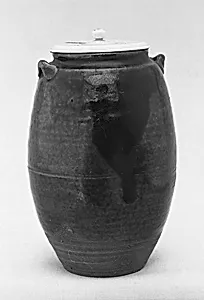
Tea Jar
Unknown Artist
18th century
Medium
Clay covered with glaze and an overglaze; two-handled with left-handed itogiri (Takatori ware)
Dimensions
H. 3 1/2 in. (8.9 cm)
Classification
Ceramics
Culture & Period
Japan · Edo period (1615–1868)
Department
Asian Art
Museum
Metropolitan Museum of Art, New York, NY
Credit
Gift of Mr. and Mrs. Samuel Colman, 1893
Accession Number
93.1.229a, b
Rights
Public Domain
Art Historical Context
This delicate **Tea Jar** from 18th-century Japan exemplifies the refined artistry of the Edo period (1615–8), a time when tea culture flourished among samurai, merchants, and scholars. Crafted by an unknown artist in theatori ware tradition—one of Japan's historic kilns in Fukuoka Prefecture—this petite vessel (just 3½ inches tall) was designed for storing precious matcha powder used in the chanoyu tea ceremony. Its two handles and compact form made it practical for the intimate ritual, embodying the wabi-sabi aesthetic of humble beauty and impermanence. Takatori ware is renowned for its rustic yet sophisticated ceramics, here fashioned from clay coated in glaze and overglaze, adorned with a distinctive left-handed *itogiri*—a precise incising technique that creates textured, thread-like patterns. This method highlights the potter's skill in balancing functionality with subtle decoration, often fired in wood kilns to yield earthy tones and natural ash effects. Such pieces were prized for their tactile appeal, enhancing the sensory experience of tea preparation. A gift to the Metropolitan Museum of Art from Mr. and Mrs. Samuel Colman in 1893, this jar offers a window into everyday Edo elegance, reminding us how ceramics bridged art and ritual in Japanese life.