
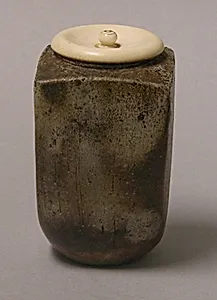
Tea jar
Unknown Artist
18th century
Medium
Pottery (Bizen ware)
Dimensions
H. 3 1/2 in. (8.9 cm)
Classification
Ceramics
Culture & Period
Japan · Edo period (1615–1868)
Department
Asian Art
Museum
Metropolitan Museum of Art, New York, NY
Credit
Fletcher Fund, 1925
Accession Number
25.215.13a, b
Rights
Public Domain
Art Historical Context
This petite tea jar, crafted in Bizen ware during Japan's Edo period (1615–1868), exemplifies the rustic elegance of traditional Japanese ceramics. Standing just 3½ inches (8.9 cm) tall, it served as a chaire—a small container for storing precious powdered green tea (matcha) in the refined tea ceremony, or chanoyu. Produced in the Okayama region, Bizen ware is renowned for its unglazedware, fired at high temperatures in wood-burning noborigama kilns, where natural ash from the flames creates subtle, earthy glazes and distinctive flame markings like shigaraki or hidasuki patterns. The Edo era marked a golden age for such artisanal pottery, as urban prosperity and the tea master's aesthetic fueled demand for humble yet profound objects that embodied wabi-sabi—celebrating imperfection, simplicity, and transience. Bizen pieces like this were prized for their durability and understated beauty, often handed down through generations without decoration, letting the clay's natural tones and textures shine. Acquired through the Fletcher Fund in 1925, this jar now graces the Metropolitan Museum of Art's Asian Art collection, offering visitors a tangible link to Japan's tea culture and the anonymous mastery of its potters.