
Teabowl
Unknown Artist
ca. 1850
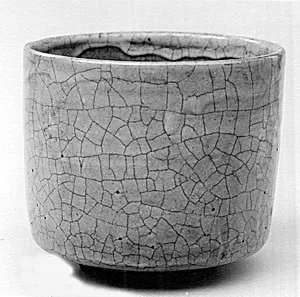
Medium
Clay; thin, crackled glaze outside and flowing over top; soft pink glaze inside (Hagi ware)
Dimensions
H. 3 1/2 in. (8.9 cm); Diam. 4 in. (10.2 cm)
Classification
Ceramics
Culture & Period
Japan · Edo period (1615–1868)
Department
Asian Art
Museum
Metropolitan Museum of Art, New York, NY
Credit
The Howard Mansfield Collection, Gift of Howard Mansfield, 1936
Accession Number
36.120.511
Rights
Public Domain
Art Historical Context
This exquisite teabowl, crafted around 1850 during Japan's Edo period (1615–8), exemplifies the revered Hagi ware tradition from western Japan. Made of clay with a thin, crackled glaze on the exterior that flows gracefully over the rim, and a soft pink glaze inside it measures just 3½ inches high and 4 inches in diameter—perfectly proportioned for the intimate ritual of chanoyu, the Japanese tea ceremony.agi ware, prized for its subtle imperfections and earthy textures, captures the wabi-sabi aesthetic of transience and humility, where the glaze's natural crazing evokes the passage of time. In the late Edo era, as Japan refined its tea culture amid isolationist policies, such bowls were essential tools for chanoyu masters, enhancing the sensory experience of matcha preparation. The crackled surface not only adds tactile appeal but also absorbs tea stains over time, developing a unique patina that deepens its character with use. This anonymous artist's work, part of The Howard Mansfield Collection gifted to the Metropolitan Museum of Art in 1936, highlights Hagi's enduring influence on ceramics, bridging utility and artistry in everyday rituals. Today, visitors can appreciate how this modest vessel embodies Japan's philosophical depth, inviting reflection on simplicity amid life's fleeting beauty.