
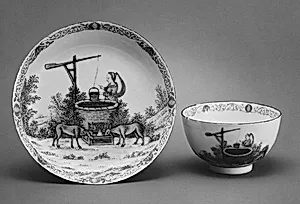
Teabowl and saucer
Unknown Artist
1740–50
Medium
Hard-paste porcelain
Dimensions
Overall (teabowl .22): 1 5/8 in. (4.1 cm); Diameter (saucer .23): 4 3/4 in. (12.1 cm)
Classification
Ceramics-Porcelain-Export
Culture
Chinese with Dutch decoration, for Dutch market
Department
European Sculpture and Decorative Arts
Museum
Metropolitan Museum of Art, New York, NY
Credit
Gift of Mrs. Harold D. Shattuck, 1961
Accession Number
61.224.22, .23
Rights
Public Domain
Tags
Art Historical Context
This delicate teabowl and sa, crafted around 1740–50, exemplifies the vibrant global trade in luxury goods during the 18th century. Made of hard-paste porcelain—a translucent, durable material perfected by Chinese potters centuries earlier—the set was produced in China specifically for export to the Dutch market. Dutch decorators then added their distinctive touches, blending Eastern craftsmanship with Western tastes in a process known as "Dutch decoration." Measuring just 1⅝ inches tall for the bowl and 4¾ inches across the saucer, its petite scale suited the intimate ritual of tea drinking, which was exploding in popularity across Europe. The artwork's motifs—depicting wells, women, and deer—offer a glimpse into the fanciful chinoiserie style that captivated European collectors. These pastoral scenes, painted in vibrant enamels overglaze, reflect cultural exchange at its finest: Chinese technical mastery met Dutch artistic flair, creating objects that symbolized status and exoticism. As part of the Metropolitan Museum of Art's European Sculpture and Decorative Arts collection (gift of Mrs. Harold D. Shattuck, 1961), it highlights how everyday ceramics became canvases for cross-continental creativity during the height of maritime commerce.