
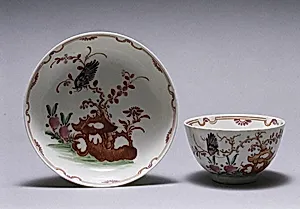
Teabowl and saucer
ca. 1770
Medium
Hard-paste porcelain
Dimensions
Height (teabowl .163): 1 13/16 in. (4.6 cm); Diameter (saucer .164): 4 5/8 in. (11.7 cm)
Classification
Ceramics-Porcelain
Culture
British, Lowestoft
Department
European Sculpture and Decorative Arts
Museum
Metropolitan Museum of Art, New York, NY
Credit
The Hans Syz Collection, Gift of Stephan B. Syz and John D. Syz, 1995
Accession Number
1995.268.163, .164
Rights
Public Domain
Tags
Art Historical Context
This delicate teabowl and sa, crafted around 1770 by the Lowesto porcelain factory in Suffolk, England, exemplifies the height of British ceramic innovation during the 18th century. Made from hard-paste porcelain—a technically advanced material mimicking coveted Chinese imports— the set measures a dainty 1 13/16 inches tall for the bowl and 4 5/8 inches across the saucer. Lowestoft's wares were prized for their affordability and quality, bridging luxury and everyday use in British homes. The porcelain's translucent, durable body marked a triumph for European potters, who had long sought to replicate Asia's secret formula. Adorned with motifs of birds and plants—likely in the popular chinoiserie style—this tea service reflects the era's obsession with tea culture. As tea drinking swept through British society, such pieces became essential for social rituals, blending exotic aesthetics with local craftsmanship. Housed in The Metropolitan Museum of Art's European Sculpture and Decorative Arts department, this gift from The Hans Syz Collection highlights Lowestoft's cultural legacy. Visitors can appreciate how these humble objects encapsulated global trade, artistic rivalry, and the simple joy of a hot cuppa.