
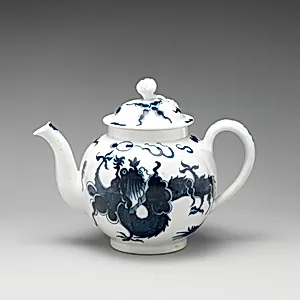
Teapot
ca. 1770
Medium
Soft-paste porcelain
Dimensions
Height: 5 1/2 in. (14 cm)
Classification
Ceramics-Porcelain
Culture
British, Lowestoft
Department
European Sculpture and Decorative Arts
Museum
Metropolitan Museum of Art, New York, NY
Credit
Gift of Alfred Duane Pell, 1902
Accession Number
02.6.3a, b
Rights
Public Domain
Tags
Art Historical Context
This elegant teapot, crafted around 1770 at the Lowestoft Porcelain Factory in Suffolk,, exemplifies the British pursuit of refined domestic wares during the Georgian era. Standing at a dainty 5½ inches (14 cm) tall, it is made of soft-paste porcelain—a, translucent material developed as a European alternative to expensive Chinese hard-paste porcelain. Lowestoft, active from 1757 to 1802, specialized in affordable tableware for the growing middle class, blending local innovation with exotic influences. The teapot's decoration, featuring dragons, reflects the era's chinoiserie craze, where whimsical Oriental motifs symbolized luxury and fantasy amid Britain's booming tea culture. These hand-painted or transfer-printed dragons likely evoke mythical power and elegance, applied overglaze in vibrant enamels—a technique that allowed intricate designs on the creamy soft-paste body. As part of the Metropolitan Museum of Art's European Sculpture and Decorative Arts collection (gift of Alfred Duane Pell, 1902), it highlights Lowestoft's role in democratizing porcelain artistry. Though modest in scale, this piece captures 18th-century tastes for tea rituals that bridged social classes, inviting visitors to imagine afternoon gatherings alive with porcelain's gentle chime.