
Teapot
Unknown Artist
ca. 1800
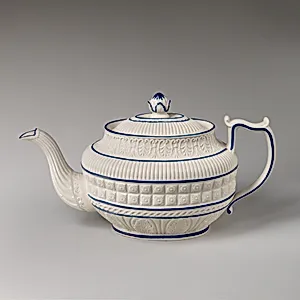
Medium
Stoneware
Dimensions
6 1/2 × 11 1/4 in. (16.5 × 28.6 cm)
Classification
Ceramics-Pottery
Culture
British
Department
European Sculpture and Decorative Arts
Museum
Metropolitan Museum of Art, New York, NY
Credit
Gift of Mrs. Hallingsworth Siter, 1929
Accession Number
29.77.2a, b
Rights
Public Domain
Tags
Art Historical Context
This elegant stoneware teapot, crafted in Britain around 1800, captures the height of the nation's tea-drinking obsession during the late Georgian era. As tea imports from China surged and became a daily ritual across social classes, households filled with specialized ceramics like this one. Measuring a practical 6½ × 11¼ inches, its form balances functionality with subtle ornamentation, likely featuring delicate floral motifs that evoke the period's love for nature-inspired designs in everyday objects. Stoneware, prized for its durability and fine texture achieved through high-temperature firing, marked a British innovation in ceramics. Unlike fragile porcelain, it was ideal for robust teaware, reflecting advancements in industrial pottery techniques pioneered by makers like Josiah Wedgwood. Though the artist remains unknown, this piece exemplifies the anonymous craftsmanship of skilled potters serving a growing middle-class market. Today, housed in the Metropolitan Museum of Art's European Sculpture and Decorative Arts collection (gift of Mrs. Hallingsworth Siter, 1929), it offers a tangible glimpse into 19th-century domestic life, where even a simple teapot embodied taste, trade, and tradition.