
Teapot
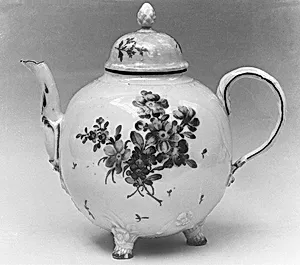
Medium
Hard-paste porcelain
Dimensions
Height: 6 in. (15.2 cm)
Classification
Ceramics-Porcelain
Culture
German, Ludwigsburg
Department
European Sculpture and Decorative Arts
Museum
Metropolitan Museum of Art, New York, NY
Credit
The George B. McClellan Collection, Gift of Mrs. George B. McClellan, 1941
Accession Number
42.205.271a, b
Rights
Public Domain
Tags
Art Historical Context
This elegant teapot, crafted around 1770 by the Ludwigsburg Porcelain Manufactory in Germany, exemplifies the refined luxury of 18th-century European ceramics. As one of the prominent factories established in the wake of Meissen’s groundbreaking discovery of hard-paste porcelain, Ludwigsburg produced delicate wares that combined technical mastery with playful Rococo sensibilities. Standing just six inches tall, this small vessel was likely part of a larger tea service, reflecting the era’s growing enthusiasm for tea drinking among the European elite. Hard-paste porcelain, fired at extremely high temperatures, allowed for thin, translucent walls and intricate detailing that softer materials could not achieve. The te’s floral motifs—suggested by its museum tags—highlight the period’s fascination with, often rendered in vibrant enamels against a white ground. Such decoration not only beautified everyday objects but also demonstrated the painter’s skill in capturing lifelike blooms on a curved, three-dimensional surface. Today housed in the Metropolitan Museum of Art’s Department of European Sculpture and Decorative Arts, this piece offers visitors a glimpse into the technological and artistic achievements of German porcelain production during the Enlightenment. Its presence in the George B. McClellan Collection underscores the enduring appeal of these finely crafted objects as both functional items and works of art.