
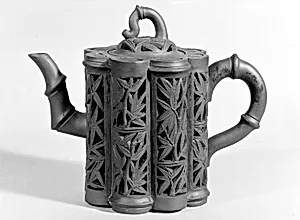
Teapot
Unknown Artist
19th century
Medium
Red stoneware (Yixing ware)
Dimensions
H. incl. finial 5 in. (12.7 cm); H. w/o finial 3 3/4 in. (9.5 cm); W. from spout to handle 6 in. (15.2 cm); Diam. of base 3 3/8 in. (8.6 cm)
Classification
Ceramics
Culture
China
Department
Asian Art
Museum
Metropolitan Museum of Art, New York, NY
Credit
Gift of Mrs. Russell S. Carter, 1944
Accession Number
44.39.1a, b
Rights
Public Domain
Art Historical Context
This elegant 19th-century te, crafted from red stoneware known as Yixing ware, exemplifies the masterful ceramics tradition of China's Jiangsu province. Standing just 5 inches tall including its finial, with a compact 6-inch width from spout to handle, its modest dimensions made it ideal for personal tea rituals. The unglazed surface highlights the rich, earthy red clay—dug locally from Yixing's famed zisha (purple sand) deposits—allowing the material's natural texture and warmth to shine through. Yixing teapots, produced since the Ming dynasty, revolutionized Chinese tea culture during the Qing era (1644–1912). Artisans shaped these vessels by hand or mold, firing them at high temperatures to create durable, non-porous stoneware that "seasoned" over time, absorbing tea oils to enhance flavor in subsequent brews. This red variant, less common than the signature purple, showcases the region's clay diversity and skilled potters' ability to harness color and form for both utility and beauty. Housed in the Metropolitan Museum of Art's Asian Art Department as a gift from Mrs. Russell S. Carter in 1944, this anonymous masterpiece invites visitors to appreciate how everyday objects embodied profound cultural reverence for tea, blending artistry, nature, and daily life in imperial China.