
Teapot
ca. 1823–ca. 1842
Medium
Earthenware, transfer-printed
Dimensions
H. 7 1/4 in. (18.4 cm)
Classification
Teapot
Culture
British (American market)
Department
The American Wing
Museum
Metropolitan Museum of Art, New York, NY
Credit
Gift of Mrs. Abraham Lansing, 1912
Accession Number
12.21.1a, b
Rights
Public Domain
Tags
Art Historical Context
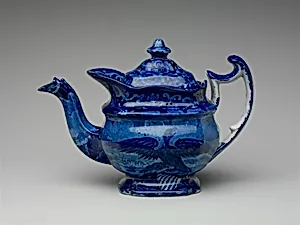
This elegant teapot, crafted by the British firm John Rogers & Son between about 1823 and 1842, was made specifically for the American market. Standing just over seven inches tall, the earthenware vessel features transfer-printed decoration, a technique that allowed intricate designs to be efficiently reproduced on ceramics. The presence of eagles among its motifs points to its patriotic appeal for American consumers during the early decades of the young republic. Transfer printing revolutionized tableware production in the Staffordshire region, enabling detailed scenes and symbols to reach middle-class households on both sides of the Atlantic. British potteries like Rogers & Son catered to American tastes by incorporating national emblems such as the eagle, blending everyday utility with expressions of identity and pride. This piece reflects the vibrant transatlantic trade that brought stylish, affordable British goods into American homes. Donated to the Metropolitan Museum in 1912, the teapot offers a glimpse into the cultural exchanges that shaped 19th-century domestic life. Its modest size and durable material made it both practical and meaningful, embodying the era’s blend of industrial innovation and national sentiment.