
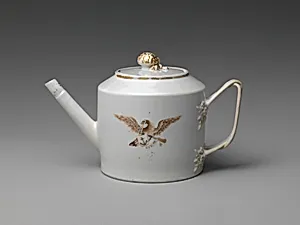
Teapot
Unknown Artist
1770–1800
Medium
Porcelain
Dimensions
H. 6 in. (15.2 cm)
Classification
Teapot
Culture
Chinese
Department
The American Wing
Museum
Metropolitan Museum of Art, New York, NY
Credit
Rogers Fund, 1941
Accession Number
41.43.1a, b
Rights
Public Domain
Tags
Art Historical Context
This elegant porcelain teapot, standing just 6 inches (15.2 cm) tall, was crafted in China by an unknown artist between 0 and 1800. Exemplifying the pinnacle of Qing porcelain production, it showcases the material's signature translucency and durability—qualities that made Chinese export wares coveted worldwide. Acquired through the Rogers Fund in 194, it now resides in The American Wing of the Metropolitan Museum Art, underscoring its role in transatlantic trade. The teapot's decoration, featuring prominent eagle motifs, reveals its customization for the American market during the Revolutionary era and early republic. Eagles, a potent symbol of emerging American patriotism, were popular requests from U.S. traders, blending Chinese technical mastery with Western iconography. This fusion highlights the global exchange of goods and ideas, as ships carried such luxuries from Canton to ports like Philadelphia and New York. As a functional yet artistic object, the teapot reflects porcelain's cultural prestige in elite households, where tea rituals fostered social bonds. Its presence in an American collection celebrates not just craftsmanship, but the interconnected histories of East and West.