
Teapot
ca. 1787–99
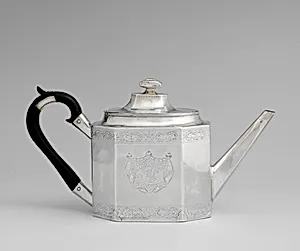
Medium
Silver
Dimensions
Overall: 6 3/16 x 11 7/16 in. (15.7 x 29.1 cm); 18 oz. 18 dwt. (588 g) Base: 5 3/8 x 3 5/8 in. (13.7 x 9.2 cm)
Classification
Teapot
Culture
American
Department
The American Wing
Museum
Metropolitan Museum of Art, New York, NY
Credit
Bequest of Alphonso T. Clearwater, 1933
Accession Number
33.120.523
Rights
Public Domain
Art Historical Context
Crafted by New York silversmith Jeronimus Alstyne around 1787–99, this elegant silver teapot exemplifies the refined artistry of early American decorative arts during the Federal period. Measuring 6 3/16 x 11 7/16 inches overall and weighing a substantial 18 ounces 18 pennyweight (588 grams), it reflects the meticulous handcraftsmanship required for such luxury items. Its oval form and sturdy base (5 3/8 x 3 5/8 inches) suggest a design suited for both functionality and display in prosperous households. In post-Revolutionary America, silver teapots like this one symbolized social status and hospitality, blending European influences—likely Neoclassical or lingering Rococo motifs—with emerging national pride. Silversmiths such as Alstyne, often of Dutch descent in New York's vibrant artisan community, produced pieces that were heirlooms, marking special occasions like weddings or civic achievements. The medium of silver, prized for its luster and durability, required advanced techniques like chasing, engraving, and seaming to achieve its smooth, gleaming finish. Now housed in The Metropolitan Museum of Art's American Wing through the bequest of Alphonso T. Clearwater in 1933, this teapot offers a tangible glimpse into the elegance of early republican life, inviting visitors to appreciate the skilled labor behind everyday opulence.