
Teapot
ca. 1720
Medium
Silver
Dimensions
7 3/16 × 9 5/16 in., 563.5g, 4 7/8 in. (18.3 × 23.7 cm, 18.117 oz., 12.4 cm) Lip diameter: 3 in. (7.6 cm) Diam. of foot: 3 5/16 in. (8.4 cm)
Classification
Teapot
Culture
American
Department
The American Wing
Museum
Metropolitan Museum of Art, New York, NY
Credit
Rogers Fund, 1947
Accession Number
47.7
Rights
Public Domain
Art Historical Context
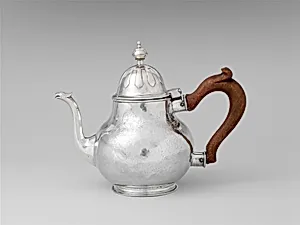
This elegant silver teapot, by New York silversmith Peter Dyck around 1720, exemplifies the refined craftsmanship of colonial America. Standing 7 3/16 inches tall with a graceful 9 5/16-inch length and weighing a substantial 18.117 ounces, it features a lip diameter of 3 inches and a foot of 3 5/16 inches, proportions that balance functionality with ornamentation. Acquired through the Rogers Fund in 194, it now graces The American Wing at The Metropolitan of Art. In the early 18th century, silver teapots like this one were prized possessions among the colonial elite, symbolizing wealth and social sophistication amid the rising popularity of tea drinking—a British import that became a staple of American households. Van Dyck, a skilled artisan in New York, contributed to a burgeoning tradition of American silverwork, where local makers adapted European techniques to create durable, heirloom-quality pieces. The teapot's gleaming silver medium highlights the era's advanced metalworking, from hammering and seaming to achieving a lustrous finish. As a cultural artifact, it offers a window into everyday luxury during America's formative years, reminding us how objects like this bridged Old World elegance with New World ambition.