
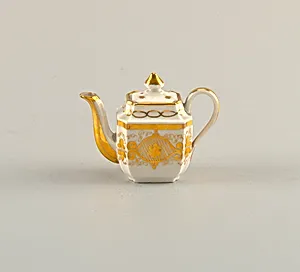
Teapot, from a Miniature Tea Set
19th–mid- 19th century
Classification
ceramics
Department
Smithsonian Collection
Museum
Smithsonian American Art Museum
Credit
Gift of Mrs. John Innes Kane
Accession Number
1920-19-52-a,b
Rights
Public Domain
About this artwork
Research in Progress
Art Historical Context
Nestled in the Smithsonian American Art Museum's ceramics collection, this delicate *Teapot, from a Miniature Tea* hails from the esteemed Du Paquier Porcelainufactory in Austria, active from 1719 to 1864. Dating to the 19th through mid-19th century, it exemplifies the manufactory's legacy as Vienna's pioneering porcelain producer. Founded by entrepreneur Claude du Paquier, factory rivaled European leaders like Meissen, crafting luxurious hard-paste porcelain prized for its translucency and durability—qualities that elevated ceramics from utilitarian ware to high art. Miniature tea sets like this one were charming novelties, often scaled for children's play, dollhouses, or as affluent collectors' items. They captured the era's fascination with tea culture, blending domestic ritual with exquisite craftsmanship. Though the precise medium details await further research, its ceramic classification underscores porcelain's technical marvel: firing kaolin clay at intense temperatures to achieve a fine, resonant body. A gift from Mrs. John Innes Kane, this piece invites us to ponder 19th-century Viennese innovation and the global allure of porcelain miniatures. (178 words)