
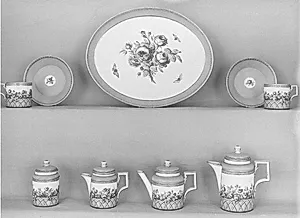
Teapot (part of a service)
Medium
Hard-paste porcelain
Dimensions
Height: 6 in. (15.2 cm)
Classification
Ceramics-Porcelain
Culture
German, Berlin
Department
European Sculpture and Decorative Arts
Museum
Metropolitan Museum of Art, New York, NY
Credit
Gift of Alfred Duane Pell, 1902
Accession Number
02.6.105a, b
Rights
Public Domain
Tags
Art Historical Context
This elegant teapot, crafted by the esteemed Royal Porcelain Manuf in Berlin around 1790, exemplifies the pinnacle of late 18th-century European artistry. Produced as part of a larger service, it stands just 6 inches tall and features delicate motifs of butterflies and flowers, hand-painted in vibrant enamels over hard-paste porcelain—a technically advanced medium prized for its durability, translucency, and resemblance to coveted Chinese exports. The manufactory, under royal patronage, was renowned for such refined tablewares that graced aristocratic homes during the Enlightenment era. Hard-paste porcelain represented a triumphant European innovation, perfected by German factories after centuries of secretive Chinese dominance. Berlin's KPM (Königliche Porzellan-Manufaktur) excelled in this material, combining precise molding with intricate overglaze decoration to create pieces that were both functional and ornamental. The naturalistic butterflies and blooming flowers reflect the era's fascination with nature, evoking the lingering Rococo elegance transitioning toward Neoclassicism. A generous gift to the Metropolitan Museum of Art in 1902 from Alfred Duane Pell, this teapot offers visitors a tangible glimpse into German decorative arts, highlighting how porcelain services fostered social rituals like tea drinking among the elite. Its pristine condition invites contemplation of craftsmanship that blended utility with breathtaking beauty.