
Teapot (part of a set)
Unknown Artist
1790–1800
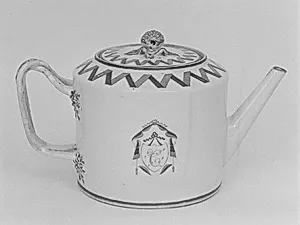
Medium
Hard-paste porcelain
Dimensions
Height (with cover): 5 11/16 in. (14.4 cm)
Classification
Ceramics-Porcelain-Export
Culture
Chinese, for British market
Department
European Sculpture and Decorative Arts
Museum
Metropolitan Museum of Art, New York, NY
Credit
Helena Woolworth McCann Collection, Gift of Winfield Foundation, 1951
Accession Number
51.86.89a, b
Rights
Public Domain
Tags
Art Historical Context
This elegant teapot, part of a matching set crafted in China for the British market between 1790 and 1800, exemplifies the pinnacle of export porcelain during the late Qing dynasty. Standing just 5 11/16 inches tall with its cover, it is made of hard-paste porcelain—a, translucent material developed in China centuries earlier and prized by Europeans for its fine quality and ability to withstand high firing temperatures. The piece likely features insignia, such as a British family crest, a common customization in armorial services commissioned by affluent patrons through the East India Company. the height of the British tea craze, such teapots bridged Eastern artistry and Western tastes, fueling global trade routes that carried not just porcelain but also tea leaves from China. These export wares symbolized status in genteel drawing rooms, where tea rituals fostered social bonds. The intricate molding and potential gilding highlight Chinese potters' mastery of form and decoration tailored to foreign preferences. Today, this teapot graces the Metropolitan Museum of Art's European Sculpture and Decorative Arts collection, a gift from the Helena Woolworth McCann Collection in 1951. It invites us to savor the cultural exchange that shaped everyday luxuries of the era.