
Teapot with cover
Unknown Artist
ca. 1750
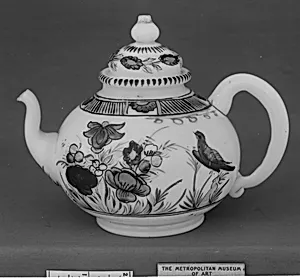
Medium
Milk glass
Dimensions
Overall: 5 5/8 × 7 1/8 in. (14.3 × 18.1 cm)
Classification
Glass
Culture
German
Department
European Sculpture and Decorative Arts
Museum
Metropolitan Museum of Art, New York, NY
Credit
Rogers Fund, 1913
Accession Number
13.31.27a, b
Rights
Public Domain
Tags
Art Historical Context
This elegant teapot with cover, around 1750 in Germany, the refined decorative arts of mid-18th-century Europe Made of milk glass—an opaque, milky-white material achieved by adding opacifiers like tin oxide molten glass—this piece stands at 5 5/8 × 7 1/8 inches, perfect for intimate tea gatherings that were a hallmark of the era's social rituals. Adorned with motifs of birds and flowers, it reflects the Rococo taste for naturalistic, whimsical decoration, evoking the natural world in a domestic setting. Milk glass was prized for its creamy translucency and versatility, allowing artisans to create affordable yet luxurious objects that mimicked porcelain. German glassmakers, particularly from regions like Thuringia, excelled in this technique, producing items for the burgeoning middle class and nobility alike. This teapot's survival and acquisition via the Rogers Fund in 1913 highlight its enduring appeal, now housed in the Metropolitan Museum of Art's European Sculpture and Decorative Arts collection. As a functional yet artistic vessel, it offers a window into 18th-century leisure culture, where tea service symbolized refinement and hospitality. Visitors can appreciate how such everyday objects blended utility with beauty, showcasing Germany's contributions to glass innovation.