
Technique Demo (Wood Grain)
1935/1942
Medium
watercolor, graphite, and pen and ink on paper
Dimensions
overall: 34.5 x 26.5 cm (13 9/16 x 10 7/16 in.)
Classification
Index of American Design
Department
CG-W
Museum
National Gallery of Art, Washington, D.C.
Credit
Index of American Design
Accession Number
1943.8.17995
Rights
Public Domain
Art Historical Context
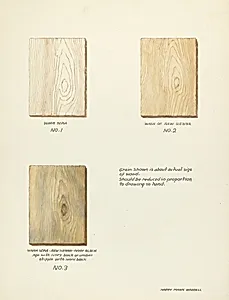
**Technique Demo (Wood Grain)** by Harry Mann Well (1935/1942) is a captivating mixed-media work on paper, blending watercolor, graphite, and pen and ink to masterfully replicate the intricate textures of wood grain. Measuring 34.5 x 26.5 cm, this piece exemplifies precision and artistry in rendering natural patterns, showcasing Waddell's technical prowess through subtle color washes, fine graphite shading, and delicate ink lines that mimic the organic flow of wood fibers. Created as part of the *Index of American Design*—a groundbreaking WPA Federal Art Project from 1935 to 1942—this watercolor served a vital role in documenting America's folk and decorative arts during the Great Depression. The Index employed artists nationwide to produce thousands of detailed renderings of historical objects, preserving cultural heritage for future generations. Housed in the National Gallery of Art's CG-W department, it highlights how such demos trained artists to capture authentic American craftsmanship. Waddell's demo not only demonstrates innovative techniques for simulating wood's depth and grain but also underscores the project's mission: celebrating everyday design as fine art. Visitors will appreciate its tactile illusion, inviting a closer look at how simple materials evoke the warmth of natural wood in an era of economic hardship and cultural rediscovery.
About the Artist
Harry Mann Waddell · 1855–present
Harry Mann Waddell (1876–1956) was an American artist born on June 22, 1876, in Ohio, whose career flourished in California after he settled in Los Angeles by 1936. There he established a studio, working as a freelance draftsman while creating fine art in his spare time. His early life and formal training remain not well documented, but by the late 1930s, Waddell had become a key contributor to th...