
BK-1955-364
c. 1600 - c. 1620
Medium
maiolica
Dimensions
40.5; 3; 40.5
Rights
Public Domain
About this artwork
Schenking van de erven van de heer A. Isaac, Amsterdam
Art Historical Context
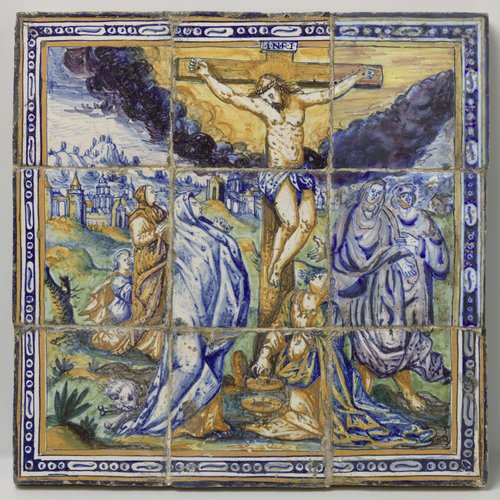
This intriguing maiolica panel, cataloged as BK-1955-364, dates to approximately 1600–1620 and measures about 40.5 cm square with a depth of 3 cm, suggesting it was designed as a decorative tile or small tableau. Crafted by anonymous artisans—possibly a team, as indicated by the triple attribution—it exemplifies the tin-glazed earthenware technique that flourished in Europe during the Renaissance and early Baroque periods. Maiolica involved coating earthenware with an opaque white tin glaze, which allowed vibrant, metallic oxide pigments to create vivid colors and intricate designs upon firing, making it prized for both durability and luminosity. In the context of the early 17th century, such pieces were often produced in workshops across Italy, Spain, and the Netherlands, where Dutch centers like Delft adapted Italian styles amid the Golden Age's prosperity. These tiles adorned bourgeois homes, fireplaces, or wainscoting, serving as affordable yet elegant alternatives to painted frescoes. Though the specific imagery remains undocumented here, its modest scale and medium highlight maiolica's role in democratizing fine art for everyday interiors. Generously donated in 1955 by the heirs of Mr. A. Isaac from Amsterdam (as noted in "Schenking van de erven van de heer A. Isaac"), this anonymous work preserves a slice of early modern craftsmanship, offering visitors a tangible link to the innovative ceramic traditions that bridged Renaissance opulence and Northern European practicality.