
十竹齋書畫譜|Ten Bamboo Studio
Unknown Artist
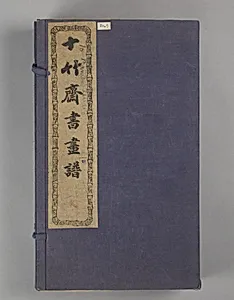
Medium
Eight volumes of woodblock-printed books; ink and color on paper
Dimensions
Overall (each): 10 1/4 x 6 1/8 in. (26 x 15.6 cm) Overall (with cover): 10 1/4 x 6 1/2 x 1 3/4 in. (26 x 16.5 x 4.4 cm)
Classification
Illustrated Books
Culture & Period
China · Qing dynasty (1644–1911), Daoguang period (1821–50)
Department
Asian Art
Museum
Metropolitan Museum of Art, New York, NY
Credit
Rogers Fund, 1924
Accession Number
CIB5a–h
Rights
Public Domain
Art Historical Context
Step into the intricate world of Qing dynasty artistry with *Ten Bamboo Studio Collection of Calligraphy and Paintings* (十竹齋書畫譜), an exquisite set of eight woodblock-printed volumes from the Daoguang period (1821–50). Produced in China during the later years of the imperial era, this illustrated book exemplifies the pinnacle of traditional printing techniques, blending ink and vibrant colors on delicate paper. Each volume measures about 10¼ x 6⅛ inches, compact yet richly detailed, making it a portable treasure for scholars and artists alike. What sets this work apart is its masterful use of multi-block woodblock printing, a labor-intensive process where separate woodblocks were carved for each color and layer, achieving stunning depth and realism. This technique, honed over centuries, allowed for precise registration of hues, from subtle gradients to bold patterns, influencing decorative arts, textiles, and painting manuals across East Asia. As a classified illustrated book in the Metropolitan Museum of Art's Asian Art collection (acquired via the Rogers Fund in 1924), it preserves motifs of flora, birds, and landscapes that served as models for craftsmen. Culturally, *Ten Bamboo Studio* reflects the Qing era's reverence for literati traditions, bridging calligraphy, painting, and design. Though the artist remains unknown, its survival offers visitors a window into how knowledge was disseminated in pre-modern China—practical, beautiful, and enduring.