
唐 銀飾片|Ten pieces of inlay
Unknown Artist
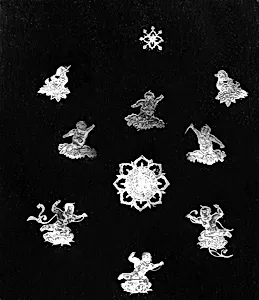
Medium
Silver
Dimensions
Display panel: 7 3/8 x 6 1/2 in. (18.7 x 16.5 cm)
Classification
Metalwork
Culture & Period
China · Tang dynasty (618–907)
Department
Asian Art
Museum
Metropolitan Museum of Art, New York, NY
Credit
Rogers Fund, 1923
Accession Number
23.183.11a–j
Rights
Public Domain
Tags
Art Historical Context
These ten exquisite pieces of silver inlay hail from China's Tang dynasty (618–907), a golden era of cultural flourishing, economic prosperity, and artistic innovation along the Silk Road. Crafted by an unknown artisan, they exemplify the period's mastery of metalwork, where silver was prized for its luster and versatility. Displayed on a panel measuring 7 3/8 x 6 1/2 inches, these fragments likely adorned luxury items like belts, horse fittings, or furniture, reflecting the elite's love for opulent, cosmopolitan decoration. The intricate inlay technique—embedding silver designs into a base material—showcases advanced metallurgical skills honed in imperial workshops. Featuring mythical creatures, a hallmark of Tang iconography, the motifs evoke dragons, phoenixes, or chimeric beasts symbolizing power, protection, and cosmic harmony. Such imagery blended indigenous Chinese traditions with Central Asian and Persian influences, underscoring the dynasty's role as a global cultural crossroads. Acquired through the Rogers Fund in 1923 and housed in the Metropolitan Museum of Art's Asian Art department, these pieces offer a glimpse into Tang splendor. They remind us how everyday luxury objects carried profound spiritual and status-laden meanings, bridging the mortal world and the divine.