
Tenman Shrine Bell
1860s
Medium
Color woodblock print; surimono
Dimensions
11.6 × 36.7 cm (4 5/8 × 14 1/2 in.)
Classification
woodblock print
Department
Arts of Asia
Museum
Art Institute of Chicago
Accession Number
43113
Rights
Public Domain
About this artwork
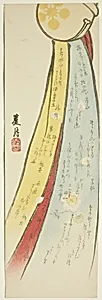
This image from the Tenman Shrine depicts a bell hung with long colored strips of fabric. Visiting the Tenman Shrine on New Year’s Day, in a “first visit” ceremony (hatsumode), was a yearly tradition that was incomplete without making an offering and ringing the temple bell. Thus, the bell became a shorthand symbol of the New Year. Nakagawa Rogetsu skillfully used the vertical format of this print to create an image of cloth strips hanging down and intermingling with falling plum petals.
Art Historical Context
Nestled in the Art Institute of Chicago's Arts of Asia collection, *man Shrine Bell* is delicate color woodblock print Nakagawa Rogetsu, in the 1860s during Japan's late Edo period. Measuring just 11.6 × 36.7 cm, this intimate horizontal format captures the iconic bell of Tenman Shrine—likely a nod to the revered Tenmangu shrines dedicated to the scholar-god Sugawara no Michizane. Rogetsu, a skilled ukiyo-e artist, renders the bell with precise lines and vibrant hues, evoking the shrine's spiritual aura amid a time of social upheaval before the Meiji Restoration. As a *surimono*, this print exemplifies a luxurious genre of privately commissioned woodblocks, often produced for New Year's greetings or poetry gatherings among Japan's elite. Unlike mass-produced ukiyo-e, surimono featured refined techniques like subtle embossing, mica dusting, and karazuri (gauffrage) for textured effects, making each piece a tactile treasure. Rogetsu's mastery shines in the bell's gleaming bronze tones and intricate rope details, blending everyday reverence with artistic finesse. This work offers a window into 19th-century Japanese culture, where shrine bells symbolized calls to prayer, protection, and scholarship. Visitors can appreciate how such prints bridged art and ritual, preserving ephemeral moments in enduring beauty.