
Tenor Cornetto in D
Unknown Artist
17th century
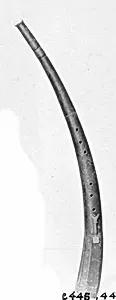
Medium
Wood, leather, metal
Dimensions
Length of tube 908 mm without mouthpiece, Diam. of bell 74 mm at widest
Classification
Aerophone-Lip Vibrated-trumpet / trombone
Culture
French
Department
Musical Instruments
Museum
Metropolitan Museum of Art, New York, NY
Credit
The Crosby Brown Collection of Musical Instruments, 1889
Accession Number
89.4.1130
Rights
Public Domain
Art Historical Context
Step into the enchanting world of 17th French music with the *Tenor Cornetto D*, a masterful aerophone from the lip-vibrated trumpet family. Crafted from wood, leather, and metal, this instrument a slender tube measuring 908 mm in length (without mouthpiece) and a bell flaring to 74 mm at its widest. The wooden body, likely turned on a lathe for its smooth curves, is typically wrapped in leather for both acoustic resonance and protection, while metal reinforcements add durability and a touch of elegance. Its tenor range in the key of D made it versatile for blending with voices and other winds. Popular during the Baroque era, the cornetto was prized for its singing, trumpet-like tone—often called the "cornett" or "cornetto muto" in softer variants. French makers excelled in these instruments, which graced court ensembles, churches, and civic bands across Europe. Though the artist remains unknown, this example exemplifies the exquisite craftsmanship of the period, where precision in boring finger holes and shaping the bore allowed skilled players to mimic human vocals with remarkable expressiveness. Housed in The Metropolitan Museum of Art's Crosby Brown Collection of Musical Instruments (acquired in 1889), this rare survivor offers a tangible link to the vibrant soundscape of absolutist France under Louis XIV. Imagine it soaring in a *haute contre* consort—history resonates through every curve!