
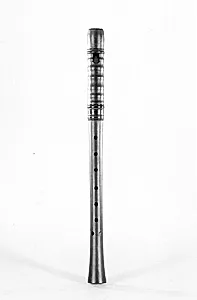
Tenor Recorder in C-sharp
19th century
Medium
Plumwood
Dimensions
Overall length 59.1 cm (23 1/4 in.)
Classification
Aerophone-Whistle Flute-recorder
Culture
German
Department
Musical Instruments
Museum
Metropolitan Museum of Art, New York, NY
Credit
The Crosby Brown Collection of Musical Instruments, 1889
Accession Number
89.4.2644
Rights
Public Domain
Art Historical Context
This tenor recorder in C-sharp, crafted by German maker Hieronimus Franciscus Kynseker in the 19th century, exemplifies the enduring tradition of woodwind instrument making in Europe. Measuring 59.1 centimeters in length and fashioned from plumwood, the instrument reflects the period’s emphasis on natural materials that offered both durability and resonant acoustic properties. As part of the Metropolitan Museum’s Crosby Brown Collection of Musical Instruments, acquired in 1889, it represents one of many historic examples preserved for study and appreciation. Recorders like this one belong to the aerophone family, specifically the whistle-flute category, where sound is produced by directing air across an edge. In the 19th century, such instruments continued to serve in both amateur and professional settings, bridging earlier Baroque practices with emerging Romantic-era tastes. Kynseker’s work highlights the skilled craftsmanship required to shape and bore the wood precisely, ensuring accurate intonation across its range. Visitors can imagine the warm, woody timbre this plumwood recorder would have produced in chamber music or solo performance. Its survival offers a tangible connection to Germany’s musical heritage and the broader story of how everyday materials were transformed into tools for artistic expression.