
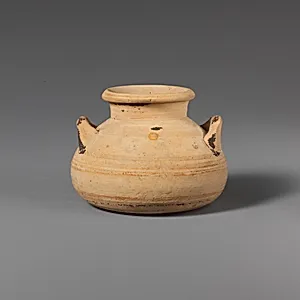
Terracotta alabastron (jar)
Unknown Artist
ca. 1600–1050 BCE
Medium
Terracotta
Dimensions
H. 1 3/4 in. (4.5 cm.)
Classification
Vases
Culture & Period
Mycenaean · Late Bronze Age
Department
Greek and Roman Art
Museum
Metropolitan Museum of Art, New York, NY
Credit
The Cesnola Collection, Purchased by subscription, 1874–76
Accession Number
74.51.5855
Rights
Public Domain
Art Historical Context
This delicate terracotta alabastron a small jar standing just 1 3/4 inches (4.5 cm) tall, hails from the Mycenaean culture of the Late Bronze Age (ca. 1600–1050 BCE). Crafted by an unknown artist, it exemplifies the everyday pottery of this influential civilization, which dominated mainland Greece with its grand palaces, like those at Mycenae and Pylos, and left behind treasures immortalized in Homer's epics. Mycenaeans were skilled seafarers and traders, blending influences from Minoan Crete with their own warrior ethos, and objects like this jar offer a glimpse into their sophisticated daily life. Alabastra were specialized vessels designed to hold precious oils, perfumes, or cosmetics, their slender necks preventing spills and allowing easy pouring. Made from terracotta—fired clay—this example highlights Mycenaean ceramic techniques, likely wheel-thrown or hand-formed and low-fired for a porous surface ideal for absorbing fragrances. Though undecorated here, such vases often featured incised patterns or simple motifs, underscoring the culture's practical artistry amid a world of bronze weapons and monumental architecture. Part of The Cesnola Collection at The Metropolitan Museum of Art, acquired through public subscription in 1874–76, this tiny artifact bridges the Bronze Age collapse and the dawn of classical Greece, reminding us how even humble vessels carried luxury and ritual in ancient hands.