
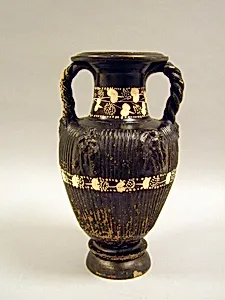
Terracotta amphora (jar)
ca. 275–250 BCE
Medium
Terracotta
Dimensions
H.: 16 1/8 in. (41 cm)
Classification
Vases
Culture & Period
Greek, Ptolemaic · Hellenistic
Department
Greek and Roman Art
Museum
Metropolitan Museum of Art, New York, NY
Credit
Purchase, 1890
Accession Number
90.9.1
Rights
Public Domain
Art Historical Context
This elegant terracotta amphora, created around 275–250 BCE, reflects the artistic traditions of the Hellenistic period under Ptolemaic rule in Egypt. Produced by the Group with Horizontal Ivy Leaves—a workshop known for its distinctive decorative motifs—the vessel features the graceful proportions typical of Greek storage jars. Its terracotta medium, fired clay shaped on a wheel and often painted, made it both practical for holding wine, oil, or grains and beautiful enough for ceremonial or household display. In the Ptolemaic era, Greek settlers and artisans brought classical forms to Egypt, blending them with local influences while maintaining the amphora’s role as a vital trade container across the Mediterranean. The ivy-leaf decoration evokes themes of fertility and Dionysian revelry, connecting the jar to broader Hellenistic interests in nature and mythology. Acquired by the Metropolitan Museum in 1890, this piece offers visitors a tangible link to the dynamic cultural exchanges of the ancient world, where everyday objects carried both utility and refined artistic expression.
About the Artist
Group with Horizontal Ivy Leaves
**Group with Horizontal Ivy Leaves** was a workshop or stylistic collective of Hellenistic Greek artisans active in the early Ptolemaic period, roughly 275–250 BCE. Their works are identified today by a distinctive decorative motif of horizontal ivy leaves, a hallmark that distinguishes their output among the many anonymous potters of the era. Operating within the vibrant cultural milieu of Greek ...