
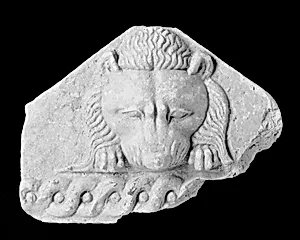
Terracotta antefix with lion's head
Unknown Artist
late 6th century BCE
Medium
Terracotta
Dimensions
H. 6 5/16 in. (16 cm)
Classification
Terracottas
Culture & Period
East Greek · Late Archaic
Department
Greek and Roman Art
Museum
Metropolitan Museum of Art, New York, NY
Credit
Gift of a friend of the Museum, 1992
Accession Number
1992.36.2
Rights
Public Domain
Tags
Art Historical Context
This striking terracotta antefix, a fierce lion's head hails from East Greek workshops in the late 6th century BCE, during the Late Archaic period. Antefixes like this one were essential architectural elements, placed at the ends of roof ridges on temples and public buildings to mask joints and add grandeur. Crafted from fired clay, a durable and affordable medium favored by Greek artisans, it measures just 6 5/16 inches (16 cm) high, yet its bold form commands attention. The snarling lion embodies power and protection, a motif rooted in Near Eastern influences that permeated East Greek art. Lions symbolized guardianship against evil spirits, warding off misfortune from sacred spaces. Modeled with incised details for fur, whiskers, and muscular tension, this piece showcases the Archaic style's emphasis on stylized anatomy and expressive features, bridging the rigid kouroi figures and the emerging naturalism of Classical Greece. Now at the Metropolitan Museum of Art (gift of a friend, 1992), it offers a window into everyday ancient devotion and craftsmanship, reminding us how even humble roof tiles glorified the divine.