
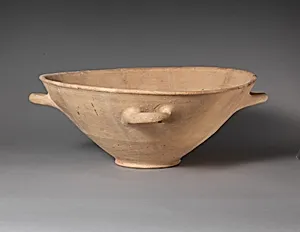
Terracotta basin with four handles
Unknown Artist
ca. 1400–1190 BCE
Medium
Terracotta
Dimensions
H. 6 3/4 in. (17 cm.) Diameter 15 5/8 in. (39.6 cm.)
Classification
Vases
Culture & Period
Mycenaean · Late Helladic IIIA-B
Department
Greek and Roman Art
Museum
Metropolitan Museum of Art, New York, NY
Credit
Gift of the Greek Government, 1927
Accession Number
27.120.3
Rights
Public Domain
Art Historical Context
This elegant terracotta basin with four sturdy handles hails from the Mycenaean civilization of Late Bronze Age Greece, dating around 1400–1190 BCE during the Late Helladic III-B period. Crafted fired clay, a durable and versatile medium favored by Mycenaean potters, it measures about 6¾ inches high and 15⅝ inches in diameter—practical for both daily use and ceremonial purposes. The symmetrical design with multiple handles suggests it was built for easy carrying, perhaps in rituals, feasting, or water storage within the grand palatial complexes of sites like Mycenae or Pylos. Mycenaean art, while often unadorned like this basin, reflects a warrior society inspired by Minoan influences yet distinctly robust, foreshadowing the heroic world of Homer's epics. Terracotta vessels like this were essential to everyday life and elite households, showcasing skilled wheel-throwing techniques and even firing that ensured longevity. Its presence in the Metropolitan Museum of Art's Greek and Roman Art collection, gifted by the Greek Government in 1927, highlights international efforts to preserve these treasures from a pivotal era that bridged the Bronze Age collapse. Step closer to imagine servants balancing it during a symposium or priests using it in offerings— a humble yet vital window into Mycenaean ingenuity and cultural vibrancy.