
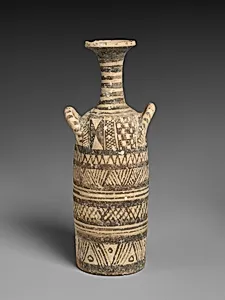
Terracotta bottle
Unknown Artist
ca. 1200–1050 BCE
Medium
Terracotta
Dimensions
H. 7 9/16 in. (19.2 cm)
Classification
Vases
Culture & Period
Cypriot · Late Cypriot IIIB
Department
Greek and Roman Art
Museum
Metropolitan Museum of Art, New York, NY
Credit
The Cesnola Collection, Purchased by subscription, 1874–76
Accession Number
74.51.1051
Rights
Public Domain
Art Historical Context
This elegant terracotta bottle hails from ancient Cyprus during the Late Cypriot III period, around 1200–1050 BCE, a time when the island thrived as a vibrant hub in the Eastern Mediterranean's Late Bronze Age trade networks.ed from fired clay, a durable and versatile medium favored by Cypriot potters, this small vessel—standing just 7 9/16 inches (19.2 cm) tall—exemplifies the practical yet refined pottery of the era. As a vase classified in the Greek and Roman Art collection at The Metropolitan Museum of Art, it reflects Cyprus's unique cultural fusion of local traditions with influences from neighboring regions like the Aegean and Near East. Such bottles were likely used to store precious liquids like oils, perfumes, or wines, underscoring the island's role in maritime commerce and daily life. The simple, bulbous form and terracotta's earthy red hue highlight the potters' skill in wheel-throwing or hand-building techniques, achieving both functionality and subtle aesthetic appeal without elaborate decoration. Part of The Cesnola Collection, acquired by subscription in 1874–76, this piece offers a tangible link to Cyprus's enigmatic transition from the Bronze Age, inviting us to ponder the hands that shaped it millennia ago.