
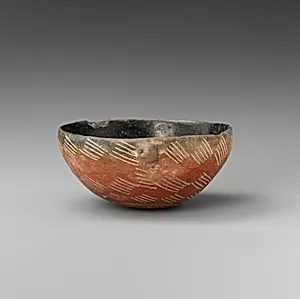
Terracotta bowl
Unknown Artist
ca. 2000–1900 BCE
Medium
Terracotta
Dimensions
H. 1 11/16 in. (4.3 cm) diameter 3 1/2 in. (8.9 cm)
Classification
Vases
Culture & Period
Cypriot · Early Cypriot III
Department
Greek and Roman Art
Museum
Metropolitan Museum of Art, New York, NY
Credit
The Cesnola Collection, Purchased by subscription, 1874–76
Accession Number
74.51.1215
Rights
Public Domain
Art Historical Context
This delicate terracotta bowl hails from Cyprus during the Early Cypriot III, around 2000–1900 BCE, a formative phase of the island's Bronze Age. Crafted by an unknown artisan, it exemplifies the everyday pottery produced in this vibrant Mediterranean culture, which bridged the Near East, Anatolia, and the Aegean through burgeoning trade networks. At just 4.3 cm high and 8.9 cm in, its modest scale suggests it served practical purposes in domestic life—perhaps for holding oils, grains, or small offerings. Made from fired clay (terracotta), the bowl highlights early Cypriot advancements in ceramic technology, likely wheel-thrown or hand-built and low-fired for durability. Such vases were ubiquitous in households and tombs, reflecting a society increasingly focused on metallurgy, agriculture, and maritime exchange. Simple in form yet essential, it offers a window into the unadorned utility of pre-urban Cypriot life. Acquired as part of The Cesnola Collection at the Metropolitan Museum of Art between 1874–76, this piece underscores Cyprus's archaeological richness, excavated amid 19th-century explorations that revealed its pivotal role in ancient connectivity. A quiet survivor of millennia, it invites us to ponder the hands that shaped it.