
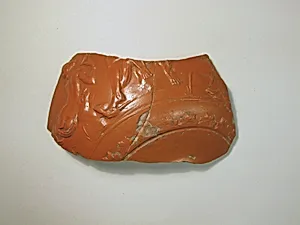
Terracotta bowl fragment
Unknown Artist
ca. 25–10 BCE
Medium
Terracotta
Dimensions
3 3/16 × 4 7/16 × 3/8 in. (8.1 × 11.2 × 0.9 cm)
Classification
Vases
Culture & Period
Roman · Early Imperial, Augustan
Department
Greek and Roman Art
Museum
Metropolitan Museum of Art, New York, NY
Credit
Gift of J. Pierpont Morgan, 1917
Accession Number
17.194.2080
Rights
Public Domain
Tags
Art Historical Context
This delicate terracotta bowl fragment hails from the Early Imperial period of ancient Rome, specifically the Augustan era (ca 25–10 BCE), a time of profound cultural transformation under Emperor Augustus. As the first Roman emperor, Augustus ushered in the Pax Romana, a golden age of stability that fostered artistic innovation blending Greek influences with Roman realism. Measuring just over 3 inches high and 4 inches wide, this shard from a larger vase exemplifies everyday Roman pottery, likely used for serving food or liquids in households. The fragment preserves a lively scene featuring men, women, and prominently displayed feet, suggesting a narrative of human activity—perhaps a procession, banquet, or mythological tableau common in Augustan art. Terracotta, a fired clay medium valued for its affordability and durability, allowed artisans to create intricate reliefs or painted details that brought stories to life. Such vases bridged utilitarian function with decorative flair, reflecting Rome's vibrant social world. Now housed in the Metropolitan Museum of Art's Greek and Roman Art Department, thanks to a 1917 gift from J. Pierpont Morgan, this piece offers a tangible glimpse into imperial daily life. Though incomplete, it whispers of the artistry that defined an empire's cultural zenith.