
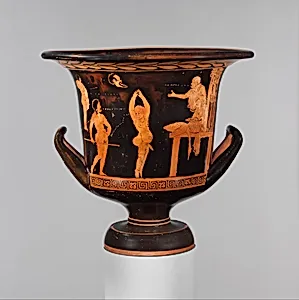
Terracotta calyx-krater (mixing bowl)
ca. 400–390 BCE
Medium
Terracotta
Dimensions
H. 12 1/16 in. (30.6 cm) diameter 12 1/2 in. (31.8 cm)
Classification
Vases
Culture & Period
Greek, South Italian, Lucanian · Late Classical
Department
Greek and Roman Art
Museum
Metropolitan Museum of Art, New York, NY
Credit
Fletcher Fund, 1924
Accession Number
24.97.104
Rights
Public Domain
Tags
Art Historical Context
Step into the vibrant world of ancient South Italy with this terracotta calyxater, a mixing bowl crafted by the Dolon Painter around 400–390 BCE. Hailing from the Lucanian region during the Late Classical period, this modestly sized vessel—standing just over 12 inches tall with a 12½-inch diameter—was designed for symposia, where wine water were blended in ritual socializing. Attributed to the Dolon, a master of South Italian red-figure pottery, it exemplifies the Greek colonial artistry flourishing in Magna Graecia. The krater's wide, calyx-like mouth and elegant form highlight advanced wheel-throwing techniques in terracotta, fired to a warm reddish hue. Red-figure decoration, where figures were outlined in black slip and details incised or painted, allowed for intricate storytelling. Tags reveal dynamic scenes featuring men, actors, male nudes, and geese, likely evoking theatrical performances or mythological narratives popular in Lucanian workshops—influenced by Athens' dramatic festivals yet infused with local flair. Acquired by the Metropolitan Museum of Art via the Fletcher Fund in 1924, this vase offers a window into everyday rituals and cultural exchange. It underscores how South Italian potters preserved and innovated Greek traditions, blending utility with artistry for both elite banquets and modern museum wonder.