
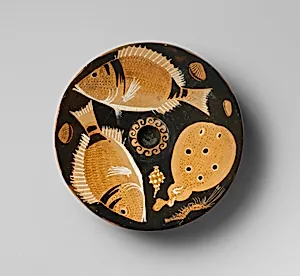
Terracotta fish-plate
ca. 350–325 BCE
Medium
Terracotta
Dimensions
H. 2 1/4 in. (5.7 cm) Diameter 8 3/4 in. (22.2 cm)
Classification
Vases
Culture & Period
Greek, South Italian, Campanian · Late Classical
Department
Greek and Roman Art
Museum
Metropolitan Museum of Art, New York, NY
Credit
Rogers Fund, 1906
Accession Number
06.1021.241
Rights
Public Domain
Tags
Art Historical Context
Step into the vibrant world of ancient South Italian pottery with this exquisite *Terracotta fish-plate* by the Helgoland Painter dating to around 350325 BCE. Crafted during the Late Classical period in Campanian region of southern Italy—a hub of Greek artistry—this shallow terracotta vessel measures just 2¼ inches high and 8¾ inches in diameter. Fish-plates like this were practical dining wares, often featuring a central sauce well surrounded by lively marine motifs, evoking the abundance of the Mediterranean Sea. The Helgoland Painter named after a vase found near the German island of Helgoland, exemplifies the red-figure technique popular in South Italian workshops. Here, glossy black glaze contrasts with reserved figures of fish and shells painted in naturalistic detail, showcasing the artist's skill in capturing movement and texture on unglazed clay. These everyday objects elevated tableware to art, blending utility decoration. Housed in the Metropolitan Museum of Art's Greek and Roman Art Department (acquired via the Rogers Fund in 1906), this piece highlights Campanian pottery's cultural role in banquets and trade. It offers a glimpse into the daily life of Greek settlers, where seafood imagery symbolized prosperity and the sea's bounty, bridging art and cuisine across millennia.