
Terracotta fragment from a kantharos: head vase? or rhyton?
Unknown Artist
490–470 BCE
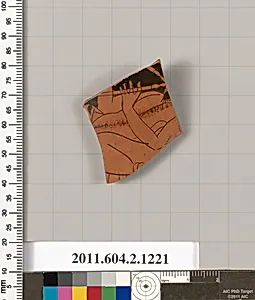
Medium
Terracotta
Classification
Vases
Culture & Period
Greek, Attic · Late Archaic/Early Classical
Department
Greek and Roman Art
Museum
Metropolitan Museum of Art, New York, NY
Credit
Gift of Dietrich von Bothmer, Distinguished Research Curator, Greek and Roman Art, 2011
Accession Number
2011.604.2.1221
Rights
Public Domain
Art Historical Context
This intriguing terracotta fragment, dating to 490–470 BCE, hails from Attic Greece during the pivotal Late Archaic to Early Classical period. Crafted by an unknown potter, it once belonged to a kanth—a deep, two-handled drinking cup popular in symposia, social gatherings where wine flowed freely among elite Athenians. The fragment's uncertain form, possibly part of a whimsical head vase (shaped like a human or animal head) or ahyton (a horn-like pouring vessel), hints at the innovative experimentation in vessel design at the time, blending utility with playful artistry. Terracotta, fired clay often adorned with vibrant slip-painted decoration (though faded here), was the medium of choice for Attic vases, showcasing masterful wheel-throwing and molding techniques. This era marked a stylistic shift from the rigid, patterned Archaic figures toward the more fluid, naturalistic forms of Classical Greece, coinciding with Athens' cultural zenith amid the Persian Wars. Such fragments offer a glimpse into daily rituals and the potter's workshop economy. Generously gifted to the Metropolitan Museum of Art in 2011 by Dietrich von Bothmer, this piece underscores the enduring allure of ancient Greek ceramics—testaments to a civilization that elevated everyday objects into art. Stand close and imagine the symposiast's toast!