
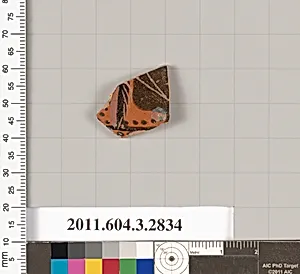
Terracotta fragment of a closed shape
Unknown Artist
510–500 BCE
Medium
Terracotta
Classification
Vases
Culture & Period
Greek, Attic · Archaic
Department
Greek and Roman Art
Museum
Metropolitan Museum of Art, New York, NY
Credit
Gift of Dietrich von Bothmer, Distinguished Research Curator, Greek and Roman Art, 2011
Accession Number
2011.604.3.2834
Rights
Public Domain
Art Historical Context
This delicate terracotta fragment from a closed-shape vase hails from Attic Greece during the late Archaic period, around 510–500 BCE. Crafted by an unknown artist, it represents the pinnacle of Athenian pottery production, when potters and painters exported their wares across the Mediterranean, spreading Greek culture far and wide. Closed shapes like this—possibly a lekythos for oils or an aryballos—were everyday luxuries, often decorated with vivid scenes from mythology, athletics, or daily life. acotta, fired clay painted with mineral slips, allowed for the iconic black-figure technique (with incised details) or the emerging red-figure style that revolutionized Greek vase-painting by reserving natural clay for figures. Though only a fragment survives, it offers a glimpse into the technical mastery of Attic workshops, where potters balanced form and function in symmetrical, elegant designs. These vessels weren't just utilitarian; they were storytelling canvases reflecting Archaic ideals of beauty, heroism, and the divine. Today, this piece graces the Metropolitan Museum of Art's Greek and Roman Art department, a generous 2011 gift from Dietrich von Bothmer, a legendary curator. Such fragments are treasures for scholars, piecing together lost narratives and techniques from antiquity's vibrant ceramic tradition.