
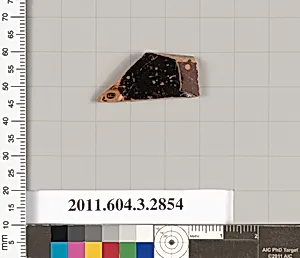
Terracotta fragment of a closed shape
Unknown Artist
late 6th/early 5th century BCE
Medium
Terracotta
Classification
Vases
Culture & Period
Greek, Attic · Archaic
Department
Greek and Roman Art
Museum
Metropolitan Museum of Art, New York, NY
Credit
Gift of Dietrich von Bothmer, Distinguished Research Curator, Greek and Roman Art, 2011
Accession Number
2011.604.3.2854
Rights
Public Domain
Art Historical Context
This terracotta fragment from a closed-shape vase hails from Attic Greece during the Archaic period, roughly late 6th to early 5th century BCE. Crafted by an unknown artist, it exemplifies the masterful pottery production of ancient Athens, where potters and painters created vessels for everyday use, rituals, and trade. Closed shapes like this—possibly a lekythos or amphora—were often used for storing oils, perfumes, or wines, blending functionality with artistic flair. In the Archaic era, Attic workshops pioneered techniques like black-figure and emerging red-figure painting, firing clay at high temperatures to achieve durable, glossy surfaces. Though only a fragment survives, it offers a glimpse into this innovative craft, which spread Greek myths, heroes, and daily life across the Mediterranean. These vases were prized exports, symbolizing Athens' cultural dominance. Generously gifted to the Metropolitan Museum of Art in 2011 by Dietrich von Bothmer, this piece underscores the enduring value of even small survivals from antiquity, helping us reconstruct the vibrant world of Archaic Greece.