
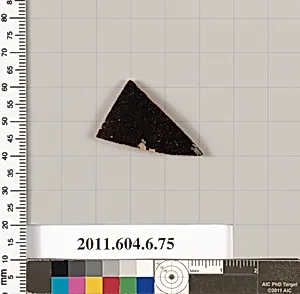
Terracotta fragment of a closed shape
Unknown Artist
6th/5th centuries BCE
Medium
Terracotta
Classification
Vases
Culture & Period
Greek, Attic · Archaic/Classical
Department
Greek and Roman Art
Museum
Metropolitan Museum of Art, New York, NY
Credit
Gift of Dietrich von Bothmer, Distinguished Research Curator, Greek and Roman Art, 2011
Accession Number
2011.604.6.75
Rights
Public Domain
Art Historical Context
This delicate terracotta fragment from a closed-shape vase hails from Attic Greece during the Archaic to Classical transition (6th–5th centuries BCE). shapes, such as lekythoi or olpai used for oils and perfumes, were everyday essentials in ancient households, often adorned with intricate black-figure or emerging red-figure paintings depicting myths, warriors, or daily life. Though incomplete, this piece exemplifies the masterful wheel-thrown pottery of Athenian workshops, renowned for their fine clay and precise firing techniques that produced durable, glossy surfaces. Attic vases like this one were cultural ambassadors, traded across the Mediterranean and beyond, spreading Greek artistry from Athens to Etruria and the Black Sea. They offer invaluable glimpses into Archaic and early Classical aesthetics—vibrant narratives frozen in clay—before the shift to more naturalistic sculpture and painting. Donated in 2011 by Dietrich von Bothmer, a pioneering scholar of Greek art, this fragment joins the Metropolitan Museum's vast collection, highlighting how even shards preserve the ingenuity of a golden age. (178 words)