
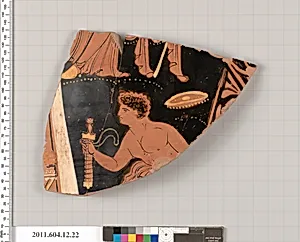
Terracotta fragment of a closed shape
Unknown Artist
4th century BCE
Medium
Terracotta
Classification
Vases
Culture & Period
Greek, South Italian, Apulian · Classical
Department
Greek and Roman Art
Museum
Metropolitan Museum of Art, New York, NY
Credit
Gift of Dietrich von Bothmer, Distinguished Research Curator, Greek and Roman Art, 2011
Accession Number
2011.604.12.22
Rights
Public Domain
Art Historical Context
This terracotta fragment from a closed-shape vase offers a glimpse into the vibrant of South Italian Greek pottery in the 4 century BCE. Hailing from the Apulian region—centered around ancient Taranto, a thriving Greek colony in modern-day Puglia—this piece exemplifies the Classical period's fusion of Greek artistic traditions with local Italic influences. Closed shapes like amphorae, lekythoi, or hydriai were essential for storing oils, perfumes, or wines, often serving both practical and ritual purposes in daily life and funerary rites. Apulian vases are renowned for their elaborate red-figure decoration, where figures were painted in glossy black slip against a reserved clay background, allowing intricate details to shine through. Though only a fragment survives, it reflects the period's masterful wheel-thrown techniques and bold motifs, possibly drawn from mythology, theater, or daily scenes that captivated ancient viewers. These vessels were prized grave goods, underscoring their cultural role in honoring the dead. Generously gifted to the Metropolitan Museum of Art in 2011 by Dietrich von Bothmer, a pioneering curator of Greek and Roman art, this fragment enriches our understanding of Apulia's pottery workshops. It invites us to ponder the skilled, anonymous hands that shaped it, bridging the ancient Mediterranean world to our modern gaze.