
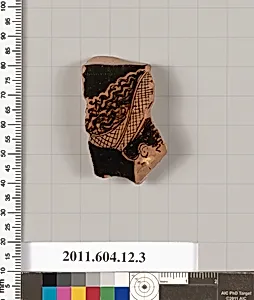
Terracotta fragment of a closed shape
first quarter of the 4th century BCE
Medium
Terracotta
Classification
Vases
Culture & Period
Greek, South Italian, Apulian · Classical
Department
Greek and Roman Art
Museum
Metropolitan Museum of Art, New York, NY
Credit
Gift of Dietrich von Bothmer, Distinguished Research Curator, Greek and Roman Art, 2011
Accession Number
2011.604.12.3
Rights
Public Domain
Art Historical Context
This terracotta fragment, created in the first quarter of the fourth century BCE by the Black Fury Group, offers a glimpse into the vibrant world of South Italian Greek pottery. Produced in Apulia, a region of Magna Graecia settled by Greek colonists, the piece reflects the Classical period’s flourishing exchange of artistic ideas between mainland Greece and its colonies. As part of a closed-shape vessel—likely an amphora or similar container—it would have served practical purposes such as storing oil or wine while also showcasing decorative ambition. The Black Fury Group represents a distinctive workshop tradition within Apulian vase painting, known for its dynamic compositions and expressive figures. Working in terracotta, artists applied slips and fired the clay in a carefully controlled process that produced the characteristic red-and-black surfaces of Greek ceramics. Though only a fragment survives, it contributes to our understanding of how these vessels combined utility with storytelling, often depicting mythological scenes or daily life. Acquired by the Metropolitan Museum of Art through the generous gift of curator Dietrich von Bothmer, this artifact highlights the enduring legacy of Greek artistic production in southern Italy. It invites visitors to imagine the complete vessel and the cultural rituals it once accompanied.