
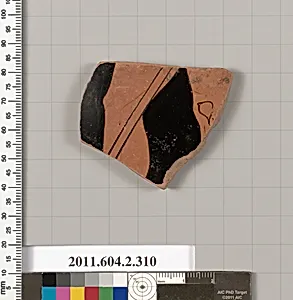
Terracotta fragment of a column-krater (bowl for mixing wine and water)
Unknown Artist
460–440 BCE
Medium
Terracotta
Classification
Vases
Culture & Period
Greek, Attic · Classical
Department
Greek and Roman Art
Museum
Metropolitan Museum of Art, New York, NY
Credit
Gift of Dietrich von Bothmer, Distinguished Research Curator, Greek and Roman Art, 2011
Accession Number
2011.604.2.310
Rights
Public Domain
Art Historical Context
This terracotta fragment from a column-krater, dating to 460–440 BCE, offers a glimpse into the vibrant world of Classical Attic Greece. A krater was a large mixing bowl essential for symposia—lively social gatherings where men diluted wine with water, fostering conversation, poetry, and philosophy. Named for its elegant column-like handles, this vessel type exemplifies the refined pottery of Athens during the height of its Golden Age under Pericles, when democracy and artistic innovation flourished. Crafted from fired clay, the fragment showcases the mastery of Attic vase-painters, who adorned such wares with intricate red-figure or black-figure scenes of mythology, daily life, and heroism. Though incomplete, it preserves the technical precision of wheel-thrown forms and glossy slips that ensured durability and beauty. These vases were not mere utensils but status symbols, often exported across the Mediterranean, spreading Greek culture. Generously gifted to the Metropolitan Museum of Art in 2011 by Dietrich von Bothmer, this piece joins a treasure trove of Greek antiquities, reminding us how everyday objects embodied the ideals of harmony, proportion, and human experience in ancient Athens.